
Essential Crime Scene Investigation Courses for Investigators
A practical guide to crime scene investigation courses that strengthen documentation, scene processing, and interpretation
Crime scene investigation courses help investigators build the technical foundation needed to document scenes accurately and preserve evidence properly. That training matters because crime scene work is not just about showing up and collecting items. It requires a working understanding of documentation, scene processing, photography, pattern interpretation, evidence handling, and the limits of each method used at the scene.
Some courses are fundamental for almost anyone working crime scenes. Others are more specialized and become important depending on assignment, agency role, and case type. The goal is not to take every class available as quickly as possible. The goal is to build a training path that strengthens field performance, improves documentation quality, and helps investigators make sound decisions under real case conditions.
Formal education can be valuable, but agencies and newer personnel should also understand What to Know Before Choosing a Forensic Science Degree Program and how degree programs differ from practical crime scene investigation training.
Table of Contents
Why crime scene investigation courses matter
Crime scene investigation courses matter because the quality of the investigation often depends on the quality of the investigator’s training. Weak scene documentation, poor evidence handling, incomplete processing, and misinterpretation of scene findings can all create problems that carry forward into reports, charging decisions, and courtroom testimony.
Why it matters: good training improves consistency. It helps investigators understand not only what to do, but why a method is used, when it should be used, and where its limits begin. That kind of practical judgment becomes especially important in complex scenes, scenes involving bloodshed, shooting incidents, latent print development, or any case where documentation must withstand later scrutiny.
Foundational crime scene investigation courses
For most investigators, the starting point should be a strong foundational crime scene investigation course. Basic crime scene investigation training gives students a working introduction to evidence recognition, documentation, scene safety, processing methods, and the general logic of scene-based forensic work. It is the course that helps newer investigators understand how the major parts of scene work fit together.
An advanced crime scene investigation course should build on that base rather than repeat it. More advanced classes should deepen decision-making, improve scene processing discipline, and expose students to more demanding documentation and interpretation issues.
What often gets missed: advanced training is most useful when students already have enough field or classroom foundation to understand why more refined methods matter.
Scene documentation and evidence recording courses
Documentation-focused training is some of the most valuable training a crime scene investigator can take because the quality of the scene record often shapes everything that follows. Crime scene photography courses are essential because photographs are not just illustrations. They are a core part of the investigative record and often become important later for case review, report support, consultation, and testimony. A strong photography course should cover camera control, lighting, exposure, close-up work, scene overviews, low-light techniques, and evidence-specific documentation.
Crime scene processing and documentation courses are also highly valuable because they strengthen the larger investigative workflow, not just one isolated skill. Those courses help investigators improve scene approach, evidence recognition, documentation sequence, processing decisions, and overall scene discipline. That kind of training is especially important for investigators who need to manage a scene methodically from start to finish rather than simply document individual items. For investigators and agencies looking for broader scene-management training, Pinnacle Forensics also offers crime scene processing and documentation training.
Laser scanning and mapping courses can also be highly useful for agencies that use those tools. When done correctly, laser scanning can improve scene recording, measurements, diagrams, and later scene review. That said, the value of the training depends on whether the agency has access to the equipment and whether personnel will actually use it in the field. For many investigators, photography, scene processing, and manual documentation skills will remain more immediately important than scanning.
Interpretation and reconstruction courses
Some of the most important crime scene investigation courses move beyond collection and documentation into interpretation. Bloodstain pattern analysis training, for example, helps investigators understand how bloodstains can inform scene reconstruction, what documentation is necessary, and where interpretation must remain disciplined and limited. This is specialized training, but it becomes especially important for investigators who routinely handle violent scenes.
Agencies evaluating specialized violent-crime training may also find What a Bloodstain Pattern Analysis Course Should Cover useful when comparing BPA course content, documentation, interpretation limits, and practical exercises.
Shooting reconstruction courses are also valuable for investigators who respond to firearm-related scenes. These courses help students understand trajectories, scene relationships, bullet path documentation, and the importance of accurate scene measurements and diagrams. Why that matters: reconstruction work can quickly become unreliable when the scene record is incomplete or when conclusions outrun the evidence.
Identification and print-related courses
Latent print development and basic fingerprint identification training remain important parts of many investigators’ development. Even when a crime scene investigator is not serving as a full fingerprint examiner, training in latent print development helps improve collection decisions, scene processing quality, and awareness of what may or may not have evidentiary value.
Basic fingerprint identification training can also help investigators make better field judgments, communicate more effectively with examiners, and understand the distinction between developing a print and comparing one. These courses are particularly helpful for investigators who want a stronger grasp of how print evidence moves from scene work into later analysis.
Specialized investigation courses
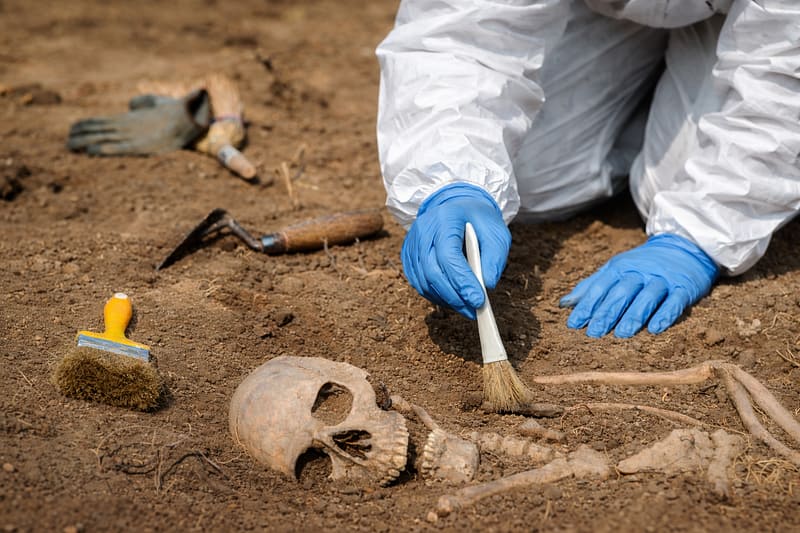
Not every course belongs at the beginning of an investigator’s training path. Some subjects are more specialized and make the most sense once an investigator already has stronger scene experience or a role that requires that specialty. Courses in forensic skeletal recovery, death investigation, post-blast investigation, and forensic fire death investigation can be highly useful, but they should be understood as more specialized training areas rather than universal first-step courses.
What to keep in mind: the right course sequence depends on the investigator’s duties. A patrol-based evidence technician, a full-time crime scene investigator, and a detective assigned to certain violent or specialized scenes may not need the same training priorities in the same order.
Which crime scene investigation courses should come first
For most investigators, the first priority should be core scene investigation training, followed closely by strong documentation training. That usually means beginning with a foundational crime scene investigation course and then building into subjects such as crime scene photography, latent print development, and other practical scene-processing areas.
After that, the right next step depends on assignment and case exposure. Investigators who handle violent scenes regularly may benefit from bloodstain pattern analysis or shooting reconstruction earlier than others. Investigators working in agencies with scanning equipment may need laser scanning and mapping sooner. The point is to build depth intentionally rather than collect unrelated course certificates. Training is only one part of professional development; investigators also need the core skills and abilities every crime scene investigator needs to apply that training effectively.
Pinnacle Forensics training opportunities
Pinnacle Forensics offers training relevant to several of the most important skill areas discussed in this article. That includes crime scene photography training, bloodstain pattern analysis training, and crime scene processing and documentation training. Together, those courses support stronger scene documentation, scene processing, interpretation, and courtroom readiness. These are not abstract topics. They are practical disciplines that directly affect how investigators document scenes, process evidence, and explain their work later.
Investigators and agencies looking for more comprehensive development should also consider how individual courses fit into a broader training plan rather than evaluating each class in isolation. Stronger training decisions usually come from identifying the actual documentation, processing, and interpretation demands investigators face in the field. For many agencies, that means combining foundational and advanced documentation training with courses that improve overall scene-processing discipline.
For agencies evaluating camera-based documentation training, What a Crime Scene Photography Course Should Cover explains the practical skills investigators should expect from a substantive photography course. For a closer look at common scene docmentation issues, see Crime Scene Documentation Mistakes and How to Avoid Them.
Conclusion
The most useful crime scene investigation courses are the ones that strengthen real investigative performance. Foundational scene training, photography, print development, reconstruction-related subjects, and selected specialty courses all have value, but they do not all carry the same weight at the same stage of an investigator’s development.
A better approach: build training in a logical sequence. Start with the core disciplines that improve scene recognition, documentation, and evidence handling. Then add more specialized courses based on actual assignment, case exposure, and agency needs. That kind of training path does more than improve knowledge. It improves the quality of the investigation.